
Load protection for every mode of transport
Road, sea or air: every journey tests the load in a different way. See how hardboard handles each one.
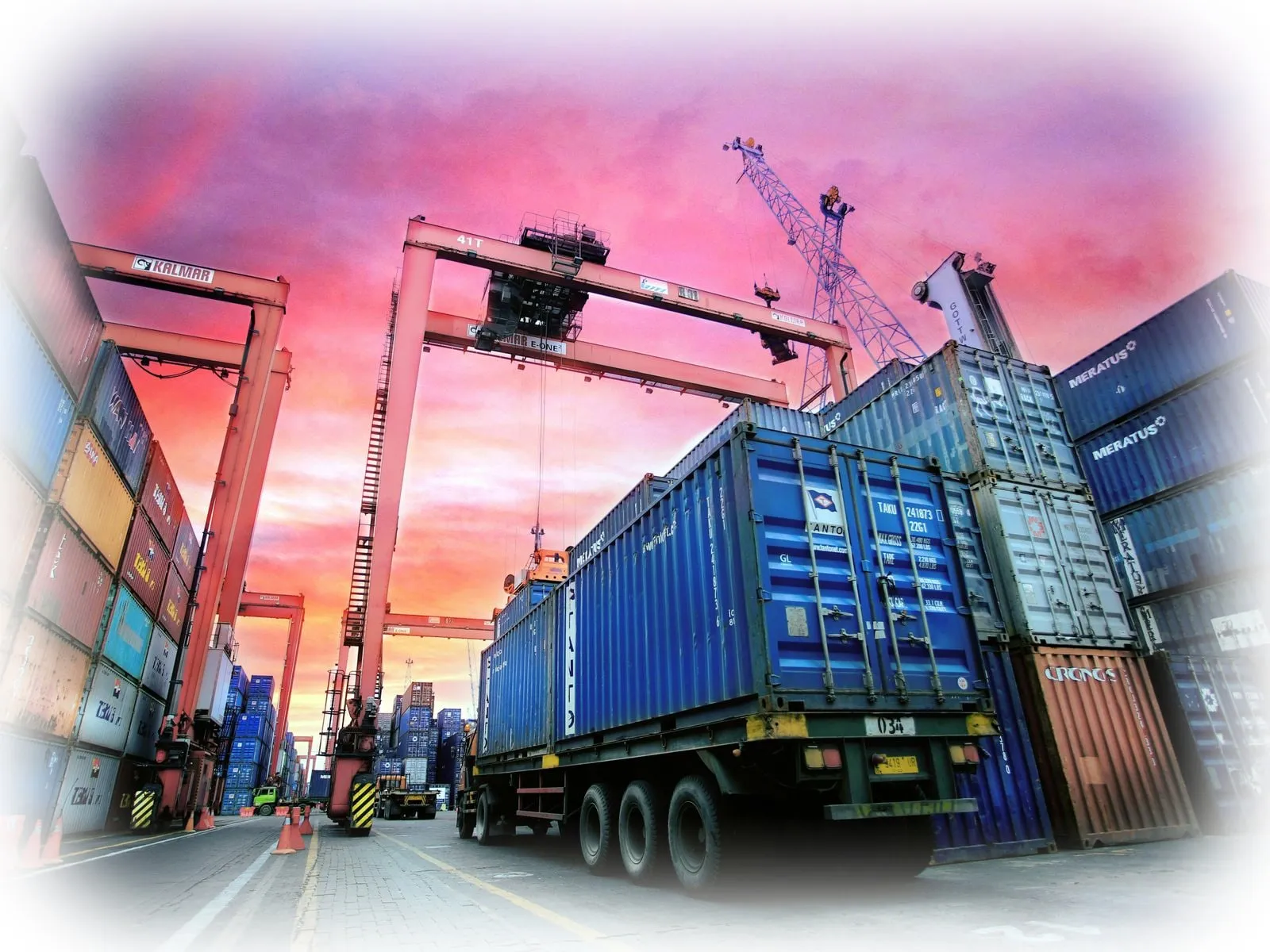
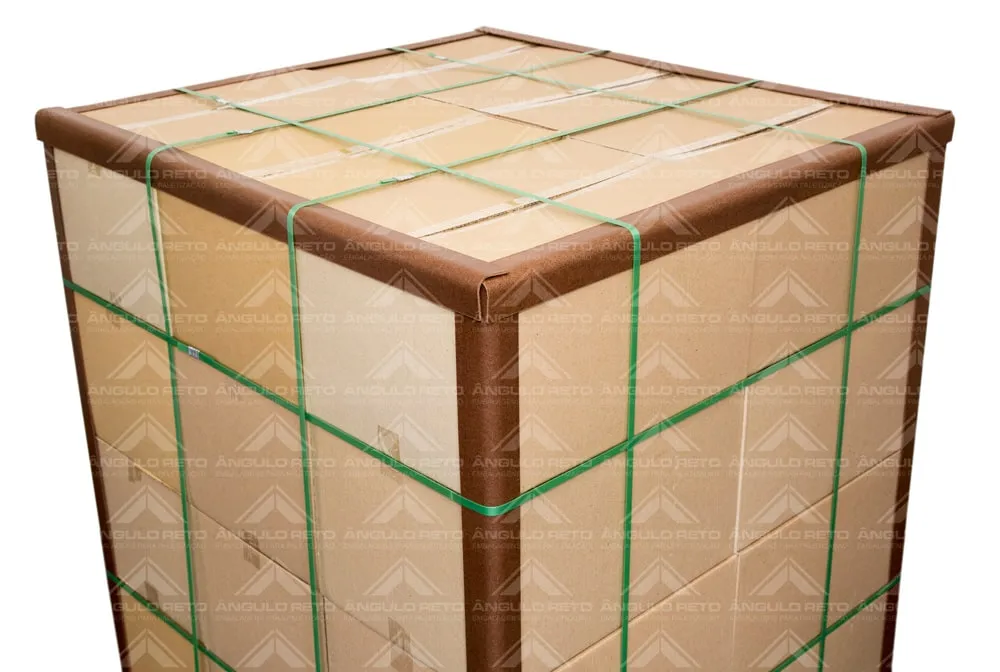
Sea freight and export
In a container, cargo spends weeks in a humid environment, with constant motion and temperature swings. At destination, it still goes through phytosanitary inspection.
- No fumigation
- Hardboard is processed wood. ISPM 15, section 2.1, places it outside the fumigation and heat treatment requirement. Lower cost, shorter lead time and no stamp to check.
- Container humidity
- Hardboard absorbs much less moisture than cardboard. The pallet columns stay firm from the port of origin to the port of destination.
- Reefer containers
- In refrigerated cargo, hardboard edge protectors keep their strength where cardboard goes soft.
Road freight
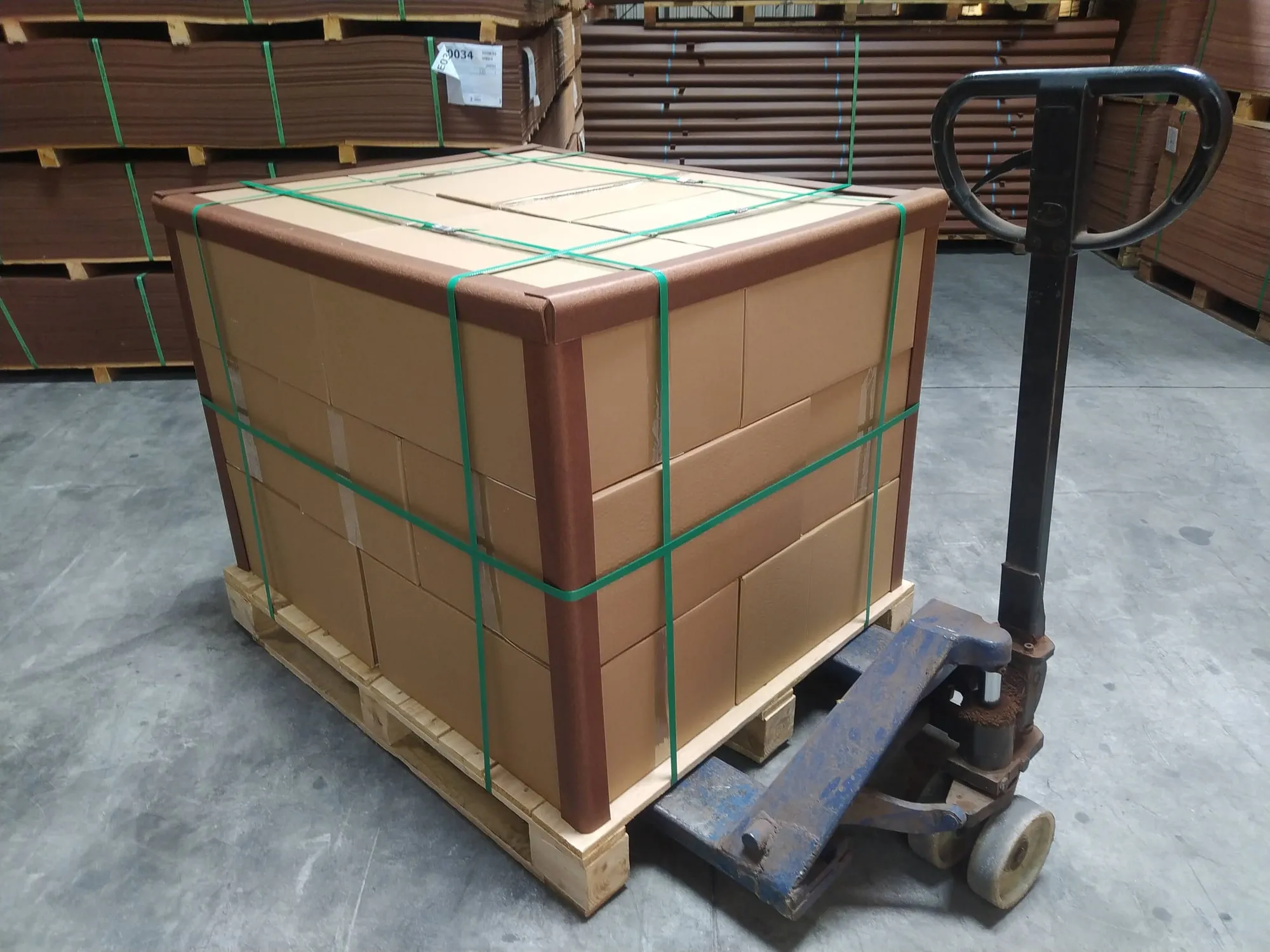
On the road, cargo faces vibration, braking, curves and repeated loading and unloading along the way.
- A locked load
- Edge protectors form columns on all four corners and separators hold each layer. The pallet does not come apart in curves.
- Higher stacking
- Stronger columns let you stack pallets safely in the truck and in the warehouse.
- Less stretch film
- With a stable load, you need fewer wraps of plastic film per pallet.
Air freight
In air freight, every centimeter of volume is expensive, and cargo is handled quickly at terminals.
- Thin profile
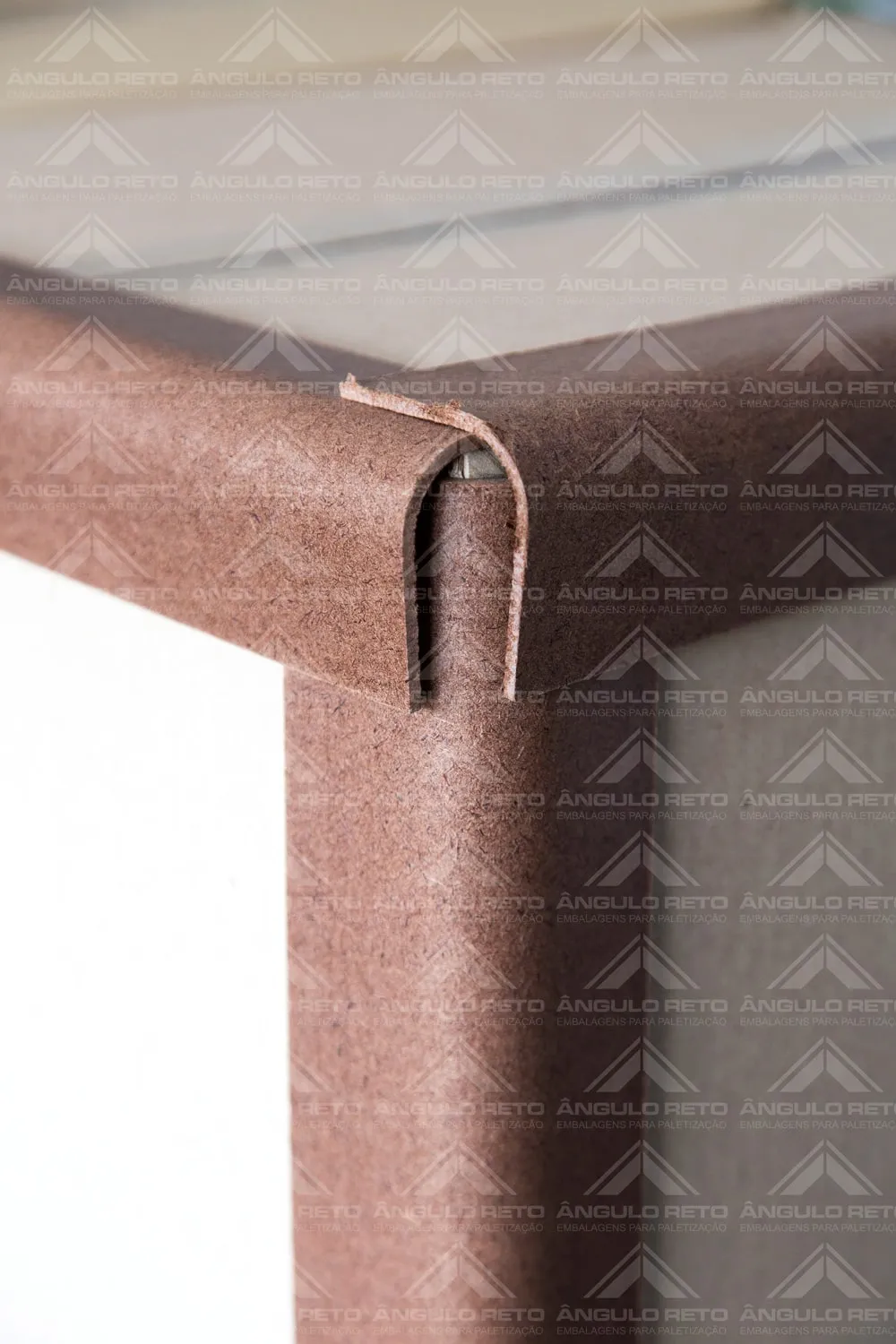
- A 3 mm edge protector does the job of cardboard up to 10 mm. Less volume taken up by protection.
- Fast handling
- Reinforced corners better withstand the quick handling of cargo terminals.
- International shipments
- The ISPM 15 exemption applies to any international shipment, including air freight.
ISPM 15 in one paragraph
ISPM 15 is the international standard that requires solid wood packaging to be treated against pests before export. Processed wood, such as hardboard, is outside this requirement under section 2.1. That is why hardboard edge protectors, separators and boards ship with no fumigation and no stamp.
More export questions